
Custody
Why Are So Many Spouses Choosing Mediation Instead of Family Court?
If you are thinking about divorce, you have probably already heard some version of the story: months of court dates, legal fees that keep climbing, and a process that leaves everyone emotionally and financially exhausted. I hear this from nearly every person who reaches out to me — not as a fear of the unknown, but as a reason they are looking for something different.
That something different is mediation. And more spouses are choosing it every day.
Family Court Was Designed for Fighting
The court system exists to resolve disputes. By its very nature, it places two people on opposite sides and asks a judge to decide who gets what. That structure tends to deepen conflict rather than resolve it.
Moving Forward: What Pennsylvania Parents Need to Know About Relocation
When a separated or divorced parent wants to move, Pennsylvania law has specific requirements that both parents need to understand. Here is what relocation means for your family and how mediation can help you reach an agreement on your own terms.
Read MoreExpress Divorce Mediation
Separation is rarely simple — but the legal process of formalizing it doesn’t always have to be drawn out. For spouses who have already reached a general understanding and simply need a structured, professional framework to document their agreements, traditional litigation can feel unnecessarily costly and adversarial.
That’s the problem Express Mediation was designed to solve. It’s a streamlined alternative for spouses who are aligned on the essentials and want to move forward with clarity, dignity, and efficiency.
Because the session is structured around efficiency, we ask that both spouses come prepared. This means having thought through your core priorities — property, finances, and if applicable, parenting arrangements — before we sit down together. The clearer your starting point, the more productive the session will be.
Read MoreHow is Alimony Calculated? A Clear, Practical Guide

How is alimony calculated in Pennsylvania? The answer depends on 17 statutory factors — from the length of your marriage to each spouse’s earning capacity. This guide breaks down what courts consider, how duration is determined, and how mediation can help you reach a fair agreement on your own terms.
Read MorePennsylvania Custody Factors in Mediation

When parents choose mediation to resolve custody, child support, and family law issues, they keep control, reduce stress, and focus on what matters most—their child.
Pennsylvania law outlines 16 custody factors that courts review when determining a child’s “best interests.”
In mediation, we use these factors as a practical guide to help you create a clear, child-centered parenting plan that supports stability, cooperation, and healthy relationships. If you are divorcing or separating, using a clear, written parenting plan custody checklist can help you stay organized, reduce conflict, and focus on your child’s well-being from the start.
Mediation: A Practical Alternative to Court

When families face divorce, the courtroom is not the best option. Mediation offers a practical, respectful path forward—one that is affordable, private, and focused on solutions rather than battles. With the guidance of a neutral mediator, you can resolve your divorce or custody matter and make decisions that keep control in your hands, not the court’s.
Read MoreWhat if my spouse will not mediate?

What if my spouse will not mediate? When couples decide to separate, one of the biggest decisions they face is how to separate and divorce. The process you choose can have a lasting impact on your finances, your co-parenting relationship, and even your emotional well-being. Two common paths are a contested divorce and a mediated no-fault divorce. Here’s a closer look at how they compare.
Read MoreSTART HERE: Getting Ready for Mediation
Step-by-Step: Getting Ready for Mediation
Walking into mediation prepared is one of the most empowering things you can do for yourself and for your family. When both spouses arrive with the information they need, sessions move forward with clarity and purpose. This guide walks you through exactly what to gather, why each item matters, and how to ready yourself emotionally as well as practically.
Frequently Asked Questions About Mediation
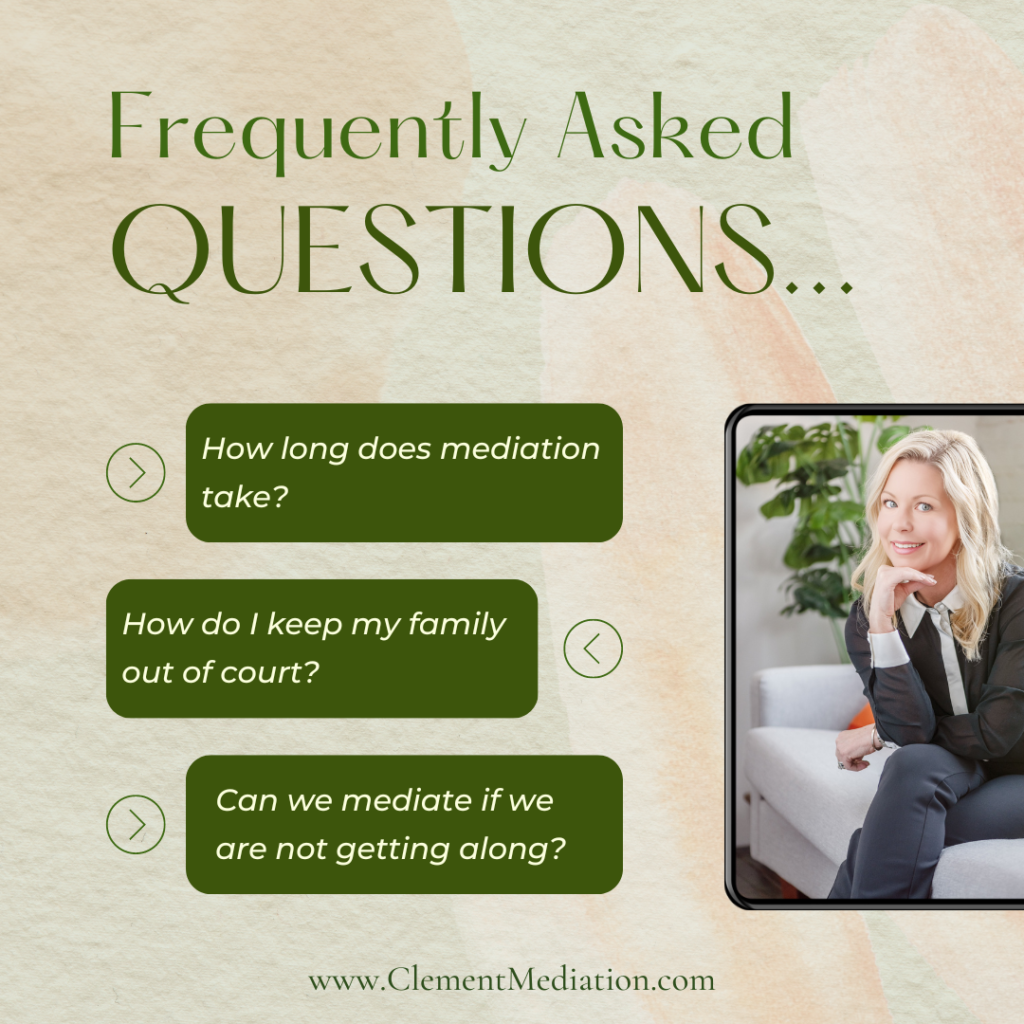
How long does mediation take? How does mediation differ from court? Does mediation require a retainer?
Read MoreDivorce Mediation After Marriage Counseling
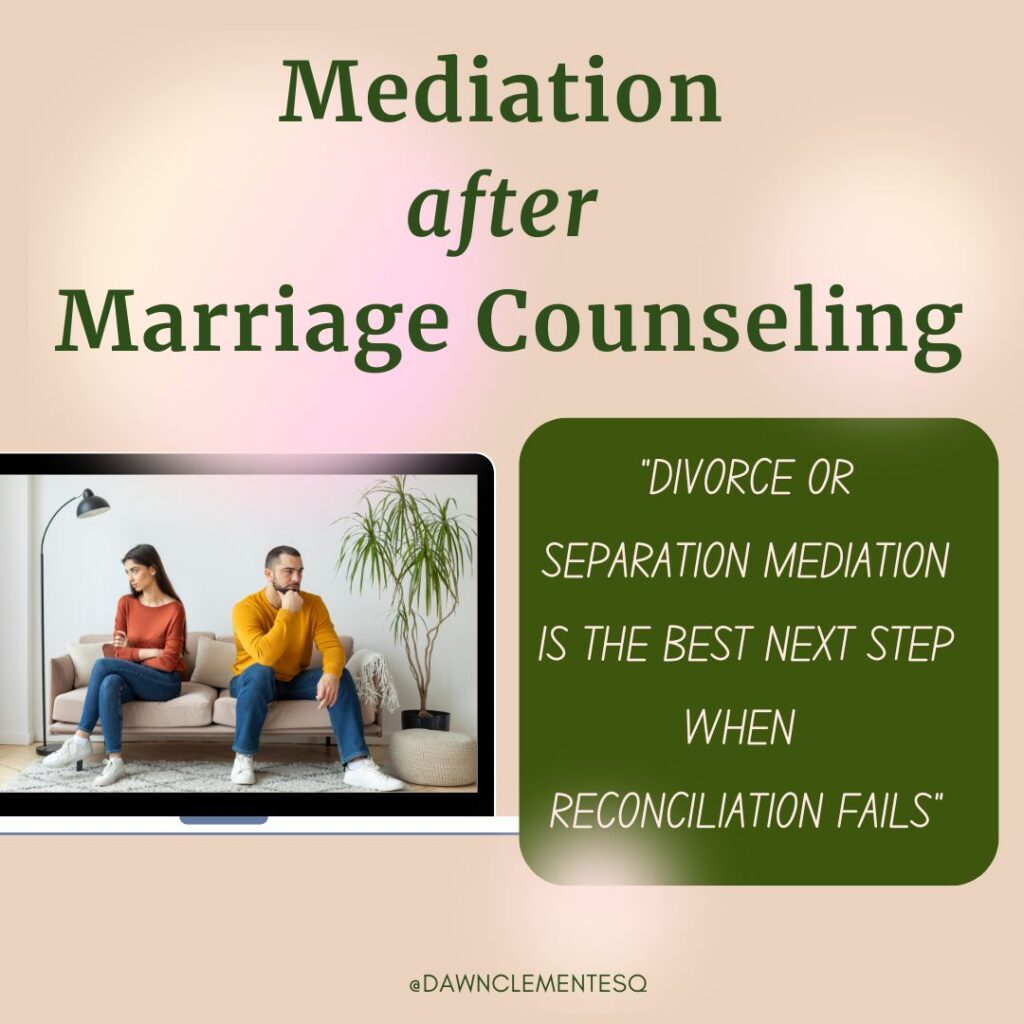
Couples therapists, clergy members, or marriage counselors help spouses and co-parents rebuild trust, improve communication, and strengthen their relationship. However, despite best efforts, some couples reach a point where reconciliation is no longer possible. When this happens, the transition away from the relationship can be just as crucial as the attempts to save it.
Read More